1. Procedure-specific experience
Experience should match the procedure under consideration, including sleeve gastrectomy, gastric bypass, revisional surgery or a medically complex case.
Hospital selection comes after the treatment question—not before it. The appropriate institution depends on the proposed procedure, surgical complexity, anaesthesia risk, obesity-related conditions and the follow-up required after returning home.
These criteria are considered together. A single impressive feature does not replace overall clinical suitability.
Experience should match the procedure under consideration, including sleeve gastrectomy, gastric bypass, revisional surgery or a medically complex case.
Assessment includes anaesthesia capability, postoperative monitoring, emergency response and access to other specialties when significant comorbidity is present.
Patients with diabetes, cardiovascular disease, sleep apnoea, fatty liver or severe obesity may require broader medical coordination before and after surgery.
Pain control, mobilisation, oral intake and discharge should be based on clinical criteria rather than a fixed tourism package.
The patient needs clear warning signs, rapid access to the treating team and a practical observation plan before international travel.
Nutrition, supplementation, laboratory testing, medication review and communication with a clinician in the home country should be planned in advance.
NextWeight first organises the available medical information. The case may include weight history, obesity-related conditions, current medication, previous surgery, laboratory or imaging results and questions that need specialist review.
We then identify the type of hospital system and specialist scope that may be relevant. This does not confirm treatment eligibility. The treating institution determines whether surgery is appropriate, which procedure may be considered and what additional testing is needed.
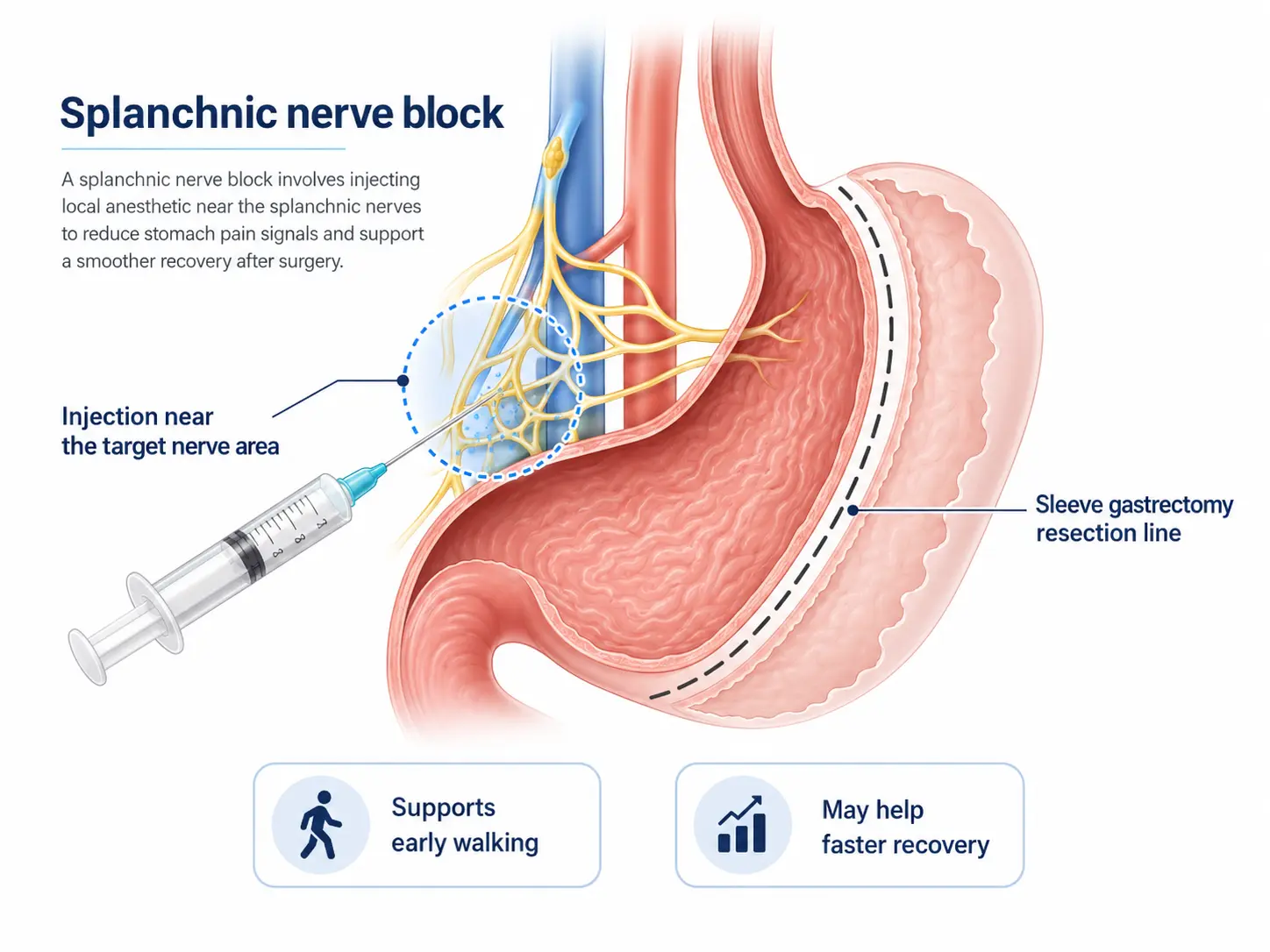
At some selected centres, a splanchnic nerve block may be used as one component of perioperative pain management. Local anaesthetic is administered near the target nerve area during surgery with the aim of reducing pain signals and supporting earlier walking.
This is an example of a centre-specific practice, not a promise that every patient will receive it or achieve the same recovery. The treating surgeon and anaesthesiologist must determine whether the method is appropriate and explain its risks and alternatives.
Some patients may meet hospital discharge criteria soon after surgery, but international travel requires a separate assessment. Oral intake, pain control, mobility, vital signs and the risk of early complications must be considered.
Bleeding, leakage and other procedure-related problems are most likely to become apparent during the early postoperative period. Passing this phase lowers some immediate risks but does not eliminate later nutritional, gastrointestinal or metabolic complications.
Operating time, pain level, admission length and discharge timing vary by anatomy, previous surgery, medical risk and intraoperative findings. No individual recovery schedule can be guaranteed in advance.
Where this fits in your decision:
You should understand your treatment options and likely procedure before comparing hospitals. Provider selection should then lead into travel planning, early recovery and long-term follow-up.
Share your medical information so the relevant specialist scope and hospital system can be identified. Diagnosis, treatment eligibility and the final care plan are determined by licensed clinicians at the medical institution.